
Why Does My Breaker Keep Tripping? Causes and What to Check First
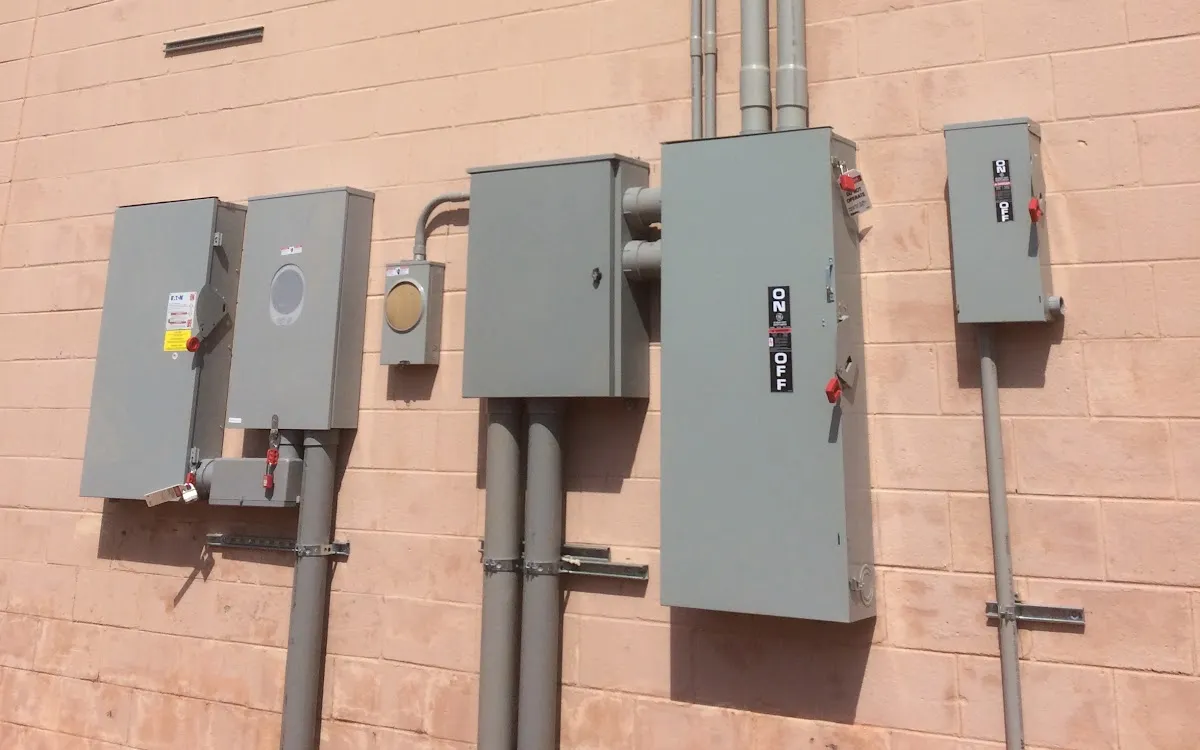
A breaker keeps tripping when the circuit pulls more power than its wire can safely carry. It also trips when there is a fault: a short, a ground fault, or a worn breaker. The pattern tells you which. Hot afternoons point to load. Rain points to a wet outdoor outlet. A trip with nothing plugged in points to a fault.
Below are the common causes and the safe checks you can do at home. You will also see when it becomes a repair.
What does it mean when a breaker keeps tripping?
It means the breaker is doing its job. A breaker shuts off the power before the wire behind it gets too hot. One trip now and then is normal. A breaker that trips again and again is telling you something is wrong.
So do not keep flipping it back on. A 2026 guide from Aire Serv says it plainly: if the breaker keeps tripping, "don't keep turning it on." This is not a small thing. The U.S. Fire Administration estimates that electrical problems caused about 23,700 home fires in 2023, with 305 deaths and 800 injuries.
What should I check first when a breaker trips?
Start with what was running when it tripped. Most trips have a cause you can spot without opening anything.
- Turn off or unplug the things on that circuit.
- Reset the breaker one time. Push it all the way to OFF, then back to ON.
- Turn things back on one at a time. Watch for the trip.
- If an outlet has TEST and RESET buttons, it is a GFCI outlet. Press RESET.
- If it trips when the AC runs, check the air filter.
If it trips again right away, or you smell something burning, stop there. Keep the panel closed and get the circuit checked.
Why does my breaker trip when I use the microwave?
Too many things that make heat are sharing one circuit. Every circuit has a limit. A 15-amp circuit can carry about 1,800 watts. A 20-amp circuit can carry about 2,400 watts. For anything that runs more than three hours, the safe limit on a 15-amp circuit drops to 1,440 watts.
Now look at what kitchen items use. An energy guide from The College of New Jersey lists a microwave at 750 to 1,100 watts. A toaster uses 800 to 1,400 watts. A coffee maker uses 900 to 1,200 watts.
Run a microwave and a toaster on the same 15-amp circuit, and you can pass 1,800 watts fast. The fix is easy. Move one of them to an outlet on a different circuit.
Why does my breaker keep tripping when the AC runs on hot days?
On hot days the AC runs longer. So its circuit carries a heavy load for more hours. NOAA climate normals for Covington (1991 to 2020) put the average July high at 89.4 degrees. They also count 1,800 cooling degree days a year. That is a count of how much cooling homes need, and it means a lot of hours with the AC on.
Aire Serv lists the usual reasons an AC trips its breaker:
- a clogged air filter
- dusty outdoor coils
- a loose connection at the breaker
- a short
- a worn compressor
A dirty filter or coil makes the unit pull more power.
A new filter is an easy fix you can do. A worn compressor or another part inside the AC unit is a job for a cooling technician. A loose connection or a worn breaker is electrical work. Conyers Handyman Services fixes that part through its home electrical repair service.
Why does my breaker trip when it rains or after a storm?
Water has most likely gotten into an outdoor outlet or its cover. Water gives the power a path it should not take, so the GFCI shuts it off. An April 2026 guide from David Gray Electrical Services says outdoor GFCI outlets are the most likely to get wet. It says rain is the most common cause. The box must be fully dry before you reset it.
Storms are common in the east Atlanta metro. NOAA's Storm Events Database logged 200 thunderstorm wind events in Walton County from 2015 through 2025. After a storm, look for a cracked outdoor cover, a loose box, or a light that took a hit. Never reset a wet outlet. Let it dry, or have it checked.
Why does my breaker trip with nothing plugged in?
If nothing is running and the breaker still trips, the cause is a fault, not too much load. These are the usual faults:
- A short. A hot wire touches a neutral wire or another hot wire.
- A ground fault. A hot wire touches a ground wire or moisture. This often happens near kitchens, bathrooms, and outdoor outlets.
- A loose connection. A backstab connection uses a small spring clip in the back of an outlet or switch to hold the wire. After years of heating up and cooling down, that clip can loosen. A loose wire can get hot or spark.
- A worn breaker. A breaker that is going bad may trip too easily, fail to reset, or not stay on.
Home age matters here. Census data shows that 52.9 percent of homes in Conyers were built before 1990. In older homes around Conyers, a worn breaker or a loose connection moves up the list of suspects.
A fault is not a do-it-yourself job. Set up a repair visit and describe what you have seen.
Can I put in a bigger breaker so it stops tripping?
No. The size of the breaker is set by the wire it protects. Under NEC 240.4(D), 14-gauge copper wire can have a 15-amp breaker at most. 12-gauge copper wire can have 20 amps at most. A bigger breaker lets that wire get too hot before anything shuts off.
Georgia's electrical code is the 2023 National Electrical Code, with state amendments. The Georgia Department of Community Affairs lists it. The right fix is to cut the load or find the fault, not to swap in a bigger breaker.
What does a breaker repair cost, and when is it a bigger job?
As of 2026, a standard breaker costs about $100 to $400 to replace. Most homeowners pay $150 to $300. That comes from a June 2026 guide by G4 Electrical, Plumbing and Air. The same guide lists these prices:
- GFCI breaker: $150 to $450
- AFCI breaker: $200 to $500
These are market ranges, not a quote for your home. Conyers Handyman Services gives an upfront quote with no hidden fees before any work starts.
Some fixes are bigger than a repair. If a circuit has to carry too much every day, the answer may be a new circuit. The City of Snellville, for one, lists new circuits as work that needs a permit. Conyers Handyman Services does not add new circuits, rewire homes, upgrade panels, or install generators. If a visit turns up one of those jobs, you will hear about it plainly. Then you can plan the next step. For a store or office, see breaker problems in a shop or office.
Who can find out why my breaker keeps tripping?
Conyers Handyman Services has worked on home electrical systems since 1991. The company is licensed and insured for electrical repair work. Owner Travis Jordan answers the phone and does the repair himself. Every job is mapped out before tools come out of the truck. Travis explains what is needed and how long it will take before the repair starts.
He works from Covington and serves homes within about 25 miles of Conyers. Ask for an upfront quote on your breaker repair.
Talk to Conyers Handyman Services
Questions about your handyman services job? We serve Covington and the surrounding area with honest, upfront advice.
FAQ
Related questions
Why does my breaker keep tripping in one room?
One room often runs on one circuit, so the trips follow what you use there. A bedroom with a portable heater or a bathroom with a hair dryer can pass the circuit's limit fast. If the room trips with little running, look at the outlets and switches in that room. A loose connection at one of them can be the cause, and that calls for a repair, not another reset.
Why does my breaker trip right after I reset it?
A breaker that trips the moment you reset it usually points to a short or a ground fault still on the circuit, or to a breaker that has worn out. Unplug everything on that circuit and try one more time. If it still trips right away, stop resetting it. Leave it off and have the circuit checked before you use it again.
Why does my breaker trip every few hours?
A trip that comes hours after things turn on often means a steady load is close to the limit. On a 15-amp circuit, anything that runs more than three hours should stay under about 1,440 watts. A portable heater can use up to 1,500 watts by itself. A worn breaker can also trip too easily, even under a normal load.